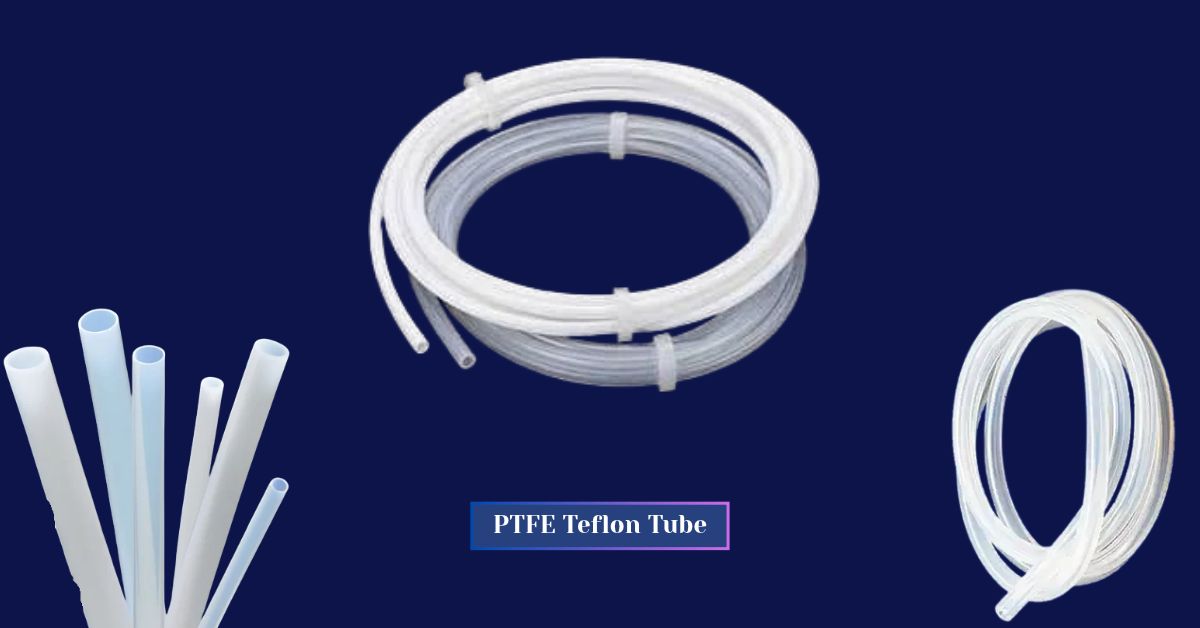
Teflon (PTFE) Tubes: Types, Sizes, and Selection Guide for Engineers
PTFE tubing is one of the most trusted materials in industries that can’t afford failure. It resists nearly every industrial chemical, holds up in extreme heat and cold, and keeps its shape and performance for years, even in the toughest working conditions.
That is why engineers turn to PTFE tubes for chemical transfer lines, pharmaceutical equipment, electrical insulation, and automotive systems. But not all PTFE tubing is the same. Different types, wall thicknesses, and sizes are made for different jobs, and picking the wrong one can lead to leaks, poor performance, or early failure.
Why Is PTFE Teflon the Go-To Choice for Tubing?
PTFE has earned its reputation because it brings together several strengths that are hard to find in one material. It resists almost every industrial chemical, including strong acids, solvents, and corrosive compounds that would wear down standard plastic or rubber tubing over time. This makes it a dependable choice for chemical transfer lines and pharmaceutical systems, where purity and safety matter most.
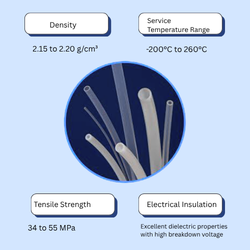
Temperature is another area where PTFE stands out. It performs reliably across an unusually wide range, from around -200°C to 260°C, so it works just as well in cryogenic systems as it does in high-heat industrial equipment. On top of that, PTFE has one of the lowest friction levels of any material, which means fluids move through the tubing smoothly, with less resistance and less buildup over time.
PTFE is also a strong electrical insulator, resistant to moisture, and doesn’t degrade with age or sun exposure. Add it all together, and it’s easy to see why engineers choose PTFE tubing for systems that simply can’t afford to fail.
What Types of PTFE Teflon Tubes Are Available?
PTFE tubing isn’t a single product; it comes in a few different types, each built for a specific kind of job. Here’s a breakdown of the most common ones:
- Standard (Extruded) PTFE Tubes – The most widely used type, made by extruding PTFE into a continuous, smooth-walled tube. Ideal for general chemical transfer, fluid handling, and insulation applications.
- Convoluted PTFE Tubes – Featuring a ribbed or corrugated wall, these tubes offer extra flexibility and can bend around tight spaces without kinking, useful in applications where routing space is limited.
- Heat-Shrink PTFE Tubing – Designed to shrink tightly around a component when heated, commonly used for insulation, protection, and cable/wire covering in electrical applications.
- Lined PTFE Tubes – PTFE used as an internal liner inside another material, usually metal or rubber, combining PTFE’s chemical resistance with the structural strength of the outer layer.
- Multi-Lumen PTFE Tubes – Tubes with multiple internal channels, often used in medical devices and precision instrumentation where several fluids or wires need to run through a single tube.
How Do You Pick the Right PTFE Tube Size?
Size matters just as much as type when it comes to PTFE tubing. A tube that’s too small can restrict flow or create pressure issues, while one that’s too large can waste material and space.
| Sizing Factor | Why It Matters |
| Inner Diameter (ID) | Determines how much fluid, gas, or wiring can pass through the tube. Should match the flow rate or component size your system requires. |
| Outer Diameter (OD) | Matters when the tube needs to fit into fittings, connectors, or housings with fixed dimensions. |
| Wall Thickness | Affects how tough the tube is, how much pressure it can handle, and how easily it bends. Thicker walls handle more pressure but bend less. Thinner walls bend more easily but handle less stress. |
| Tolerance | For precision jobs, even a small difference in size can cause leaks or make the tube hard to fit, so tight tolerances matter more here. |
| Length Requirements | Longer tube runs may need extra support or special packaging to avoid kinking during installation. |
When in doubt, it helps to work with a supplier who can guide you through sizing based on your system’s pressure, flow, and fitting needs, rather than guessing and risking a costly reorder.
Where Does PTFE Teflon Tubing Get Used the Most?
PTFE Teflon tubing is used in industries where things simply can’t afford to fail under tough conditions. In chemical processing. It carries acids, solvents, and other corrosive substances without breaking down, which is why it’s so common in plants and processing facilities. In pharmaceutical and medical settings, it’s trusted for fluid transfer lines, lab equipment, and medical devices, since it doesn’t react with other substances and is easy to sterilise.
Electrical and electronics manufacturers use PTFE tubing to coat and protect wiring because of its strong insulation and heat resistance. In the automotive industry, PTFE is used in fuel lines, hydraulic systems, and other parts that deal with constant heat, pressure, and chemical exposure under the bonnet.
The oil and gas industry is another major user, where tubing needs to withstand corrosive substances and extreme temperatures at the same time. These conditions make PTFE tubing a dependable choice for valves, seals, and fluid transport systems. Across all these industries, the common thread is the same: PTFE tubing gets used wherever failure simply isn’t an option.
What Should You Avoid When Specifying PTFE Teflon Tubing?
Even with a reliable material like PTFE, small mistakes when ordering tubing can lead to big problems later. Here’s what to watch out for:
- Choosing the wrong wall thickness
If the wall is too thin, the tube might not handle the pressure your system needs. If it’s too thick, the tube loses flexibility you may need for routing or bending.
- Ignoring tolerance requirements
In precision systems, even a slightly wrong diameter can cause leaks or make the tube hard to fit with connectors.
- Overlooking temperature limits
While PTFE handles a wide range, pairing it with fittings or components that can’t handle the same range can weaken the whole system.
- Mismatching tube type to application
If you use standard tubing where you really need flexibility, like a tight bend, it can kink or wear out early; a more flexible tube would have worked better there.
- Skipping supplier guidance
Guessing on specifications instead of confirming pressure, temperature, flow, and space requirements upfront often leads to costly reorders.
The simplest way to avoid these issues is to be clear about your system’s requirements before you order, and to work with a supplier who can guide you through the right specification.
FAQs
Transporting chemicals and fluids and insulating wires in industries like chemical, pharmaceutical, and electronics.
About -200°C to 260°C.
Yes, it resists almost all acids, solvents, and industrial chemicals.
Match the ID, OD, and wall thickness to your system’s flow and fitting needs.
Yes, it’s non-reactive and easy to sterilise.
Conclusion
PTFE tubing stands apart from ordinary tubing options — it’s what engineers choose when there’s no room for failure. It holds up against harsh chemicals, performs across extreme temperatures, and consistently outlasts standard alternatives in critical systems. That said, it only delivers this level of reliability when the type, size, and spec are matched correctly to the job.
That’s where a knowledgeable supplier becomes just as important as the material itself. Avicos Plastic manufactures PTFE tubing to strict, ISO-certified quality standards and offers custom cut-to-spec sizing, so engineers get tubing built for their exact system rather than settling for a close-enough fit.
If you are specifying PTFE tubing for an upcoming project, reach out to Avicos Plastic and let our team help you choose the right type and size from the start.