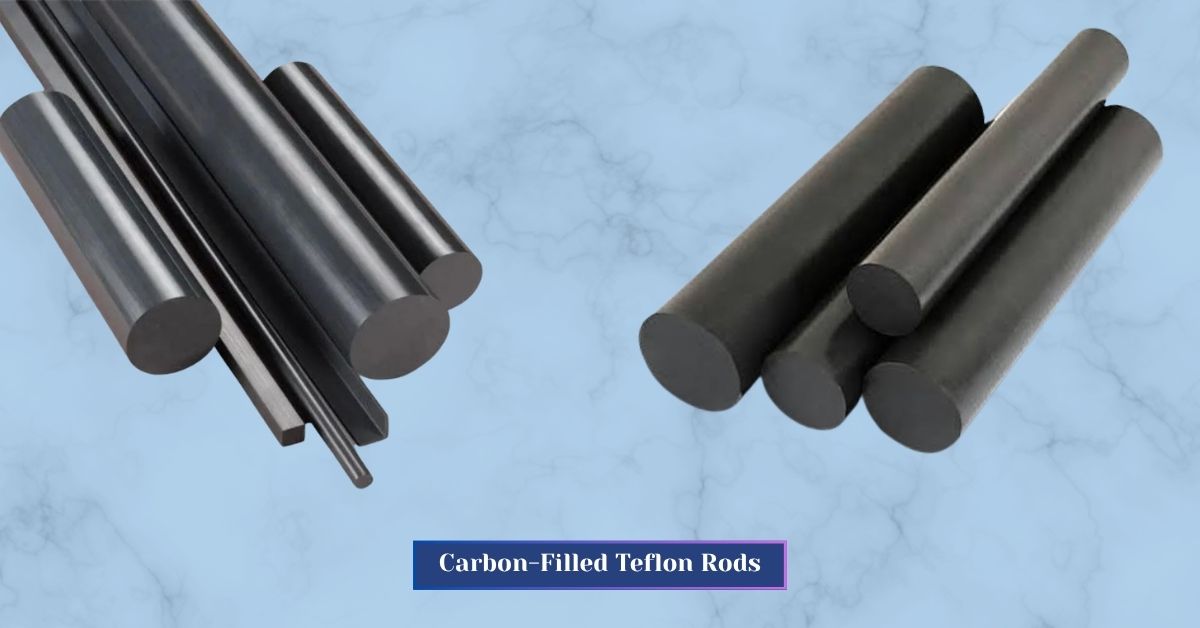
Carbon-Filled Teflon Rods: When to Choose Filled PTFE Over Virgin PTFE
Carbon-filled PTFE rods are a modified version of standard PTFE, made by blending carbon into the material to improve strength and wear performance. Carbon is added because pure, or “virgin,” PTFE, while excellent in many ways, can wear down faster under heavy mechanical loads.
The right choice between the two comes down to what your application demands most: raw chemical purity or added mechanical toughness.
What Are Carbon-Filled PTFE Rods?
Carbon-filled PTFE rods start with the same base material as standard PTFE rods, polytetrafluoroethylene, but with carbon powder or fibre blended into the resin before the rod is formed. This process is known as “filling,” and carbon is one of the most common fillers used to enhance PTFE’s mechanical performance.
Carbon filler changes the way PTFE performs when it is under load. It makes the material more resistant to wear, which helps it last longer in parts where there is regular rubbing or sliding. Carbon-filled PTFE is also stronger than virgin PTFE and can handle higher loads. It is less likely to slowly change shape when pressure is applied for a long time. This also helps the finished part keep its size and shape during use.
These improvements make carbon-filled PTFE rods a practical choice whenever a part needs more than what virgin PTFE alone can offer, without changing the base chemical resistance the material is known for.
Carbon-Filled PTFE vs Virgin PTFE
| Property | Virgin PTFE | Carbon-Filled PTFE |
| Wear resistance | Good under normal use | Higher, holds up better under constant friction |
| Mechanical strength | Moderate, softer under load | Improved, handles heavier loads |
| Creep resistance | Moderate, can deform under sustained pressure | Better, holds its shape over time |
| Chemical resistance | Excellent across most chemicals | Excellent, stays largely unchanged |
| Electrical insulation | Excellent, strong insulator | Reduced, since carbon conducts electricity |
| Dimensional stability | Good, but can shift slightly over time | Improved, stays more consistent under stress |
The biggest difference comes down to mechanical performance: carbon-filled PTFE handles wear, load, and creep better, while virgin PTFE keeps the edge on electrical insulation. Chemical resistance stays strong in both, so it’s rarely the deciding factor between them.
When Should You Choose Carbon-Filled PTFE?
Carbon-filled PTFE tends to be the better choice in a few specific situations, mainly where standard PTFE would wear out or lose shape too quickly.
- When Wear Is a Concern
Parts that are used for constant slipping or rubbing can wear out quickly when made from virgin PTFE. Carbon-filled PTFE provides better wear resistance, so it is a better option for components that experience frequent friction over a long period.
- When Mechanical Loads Are Higher
When a part has to handle heavy loads, carbon-filled PTFE provides more strength and stiffness than virgin PTFE. This makes it a better choice for components that are under constant mechanical stress, rather than those used for lighter loads.
- When Creep Needs to Be Controlled
For some applications, even small changes in shape over time can cause problems. Carbon-filled PTFE has better creep resistance than virgin PTFE, so it is less likely to deform when kept under pressure for long periods. This helps the part maintain its shape and dimensions during use.
- When Continuous Sliding Is Involved
Bearings, bushings, and guides are used in parts that move and stay in contact with other surfaces. Carbon-filled PTFE is more durable, so it works well in these applications and can perform reliably during continuous movement.
When Is Virgin PTFE the Better Choice?
Carbon-filled PTFE isn’t always the right answer. Virgin PTFE is still the better option in several situations, particularly when the priority shifts away from mechanical toughness. Virgin PTFE tends to be the better choice when:
- Chemical resistance is the main priority – It offers the purest form of PTFE’s chemical-resistant properties.
- Electrical insulation is required – Carbon-filled PTFE loses much of this ability due to the conductive nature of carbon.
- High material purity is important – Such as in food-grade or pharmaceutical applications, where virgin PTFE is typically the safer choice.
- Mechanical loading is relatively low – The added strength of carbon-filled PTFE isn’t necessary in light-duty use.
- Extremely low friction is more important than wear resistance – Virgin PTFE’s naturally smoother surface has the advantage here.
Neither material is universally more useful. The right choice depends entirely on the specific operating conditions your application needs to handle.
Applications of Carbon-Filled PTFE Rods
Carbon-filled PTFE rods are used across a range of components that deal with friction, load, or continuous motion. Check out the applications given below.
- Bearings – Where added wear resistance helps parts last longer under constant rotation.
- Bushings –Benefiting from improved strength and reduced friction in moving assemblies.
- Seals – Where dimensional stability helps maintain a reliable seal over time.
- Wear rings – Designed to resist abrasion in high-contact environments.
- Sliding components – That need consistent performance under repeated action.
- Valves and pumps – Where mechanical strength and creep resistance matter under pressure.
- Industrial machinery – With parts exposed to ongoing mechanical stress.
Carbon-filled PTFE can also be considered for demanding components used across several regional sectors, including oil & gas, petrochemical, chemical processing, water treatment and desalination, and industrial manufacturing, where equipment often operates under continuous load and harsh conditions.
How to Choose the Right PTFE Rod
The right choice between carbon-filled and virgin PTFE depends on a few key factors. These involve the operating temperature, load, sliding speed, wear, chemical exposure, electrical needs, and how well the part must maintain its shape and size.
Carbon-filled PTFE is a good choice for applications with increased loads, regular wear, or continuous sliding. Virgin PTFE may be the best choice when chemical resistance, material purity, or electrical insulation is more important.
FAQ
They are often used for bearings, bushings, seals, and other components that experience regular friction or sliding. The added strength and wear resistance help these parts perform better during continuous movement.
Not always. Carbon-filled PTFE provides better wear resistance and strength, while virgin PTFE offers better electrical insulation and purity. The correct choice depends on what your application needs most.
Yes. It holds up better than virgin PTFE in parts that face repeated friction, making it a more durable choice for things like bearings and bushings.
Yes. It’s often used in oil and gas equipment where parts deal with constant load, friction, or tough operating conditions.
Yes. Carbon-filled PTFE rods can be drilled, cut, bent, and machined much like virgin PTFE rods. The carbon filler can cause some minor differences during machining.
Conclusion
Carbon-filled PTFE and virgin PTFE both come from the same base material, but they’re made for different jobs. Carbon-filled PTFE works better for parts that deal with wear, heavier loads, or constant sliding motion, while virgin PTFE is the better pick when chemical purity, electrical insulation, or very low friction matter most.
The right choice comes down to matching the material to what your application actually needs, not just picking whichever one sounds better. At Avicos Plastic, we manufacture both carbon-filled and virgin PTFE rods to consistent quality standards, so you can pick the right fit for your project with confidence. If you’re not sure which one suits your application, our team is happy to help you decide.