
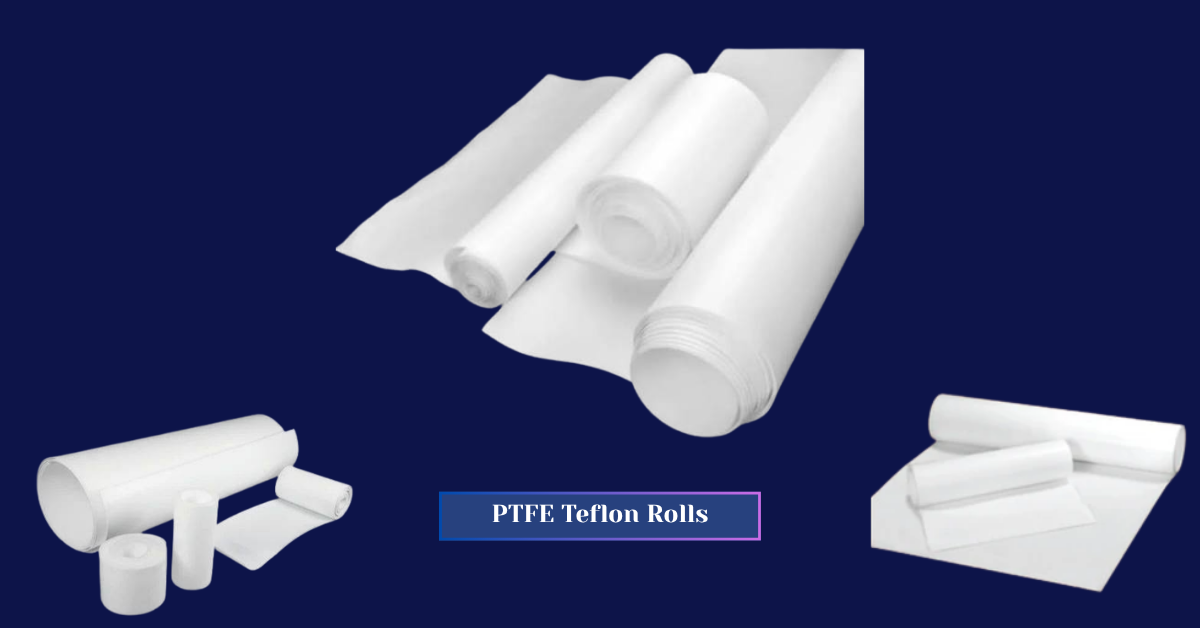
PTFE Teflon Rolls: Dimensions, Tolerances, & Use Cases in the Middle East
PTFE Teflon rolls are used in many industrial applications because they can handle chemicals, high temperatures, and regular use. Unlike PTFE sheets, which come in set sizes, rolls provide a continuous length of material. The material is wound around a core, making it easier to handle and cut to the required length.
PTFE Teflon rolls are available in different thicknesses and widths. Common thicknesses range from about 0.5 mm to 5 mm, with widths of up to 2 meters. Industries in the UAE and the wider Middle East use them for applications in oil and gas, water treatment, packaging, and other industrial processes.
What Are PTFE Teflon Rolls?
PTFE Teflon rolls consist of long, continuous sheets of PTFE wound around a core rather than cut into separate flat sheets. This format makes the material easy to store and allows you to cut it to the length you need without unnecessary waste.
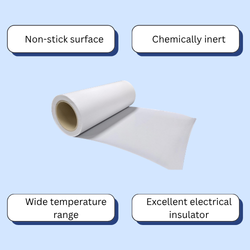
PTFE can handle many acids, solvents, and other harsh chemicals without breaking down easily. It also performs well in both very low and high temperatures, from around -200°C to +260°C. Its smooth surface creates little friction and helps prevent materials from sticking. Because of these qualities, PTFE Teflon rolls are used for liners, release films, conveyor surfaces, insulation, and other industrial applications.
Compared with flat PTFE sheets, rolls often work better when you need continuous coverage or custom lengths. You can see the full specifications on our Teflon (PTFE) Rolls product page.
Common PTFE Roll Dimensions and Tolerances
Knowing the standard sizes for PTFE Teflon rolls can help you choose the right stock and avoid paying extra for a custom cut when a standard size already meets your needs.
Thickness, Width, and Length
| Dimension | Standard Range | Notes |
| Thickness | 0.5 mm – 5 mm | Thinner rolls (0.5–1 mm) suit flexible liners and release films; thicker rolls (2–5 mm) suit gaskets and wear parts |
| Width | 1m, 1.2m, 1.5m, & 2m | Standard stock widths; wider custom sizes available on request |
| Length | 10 m (standard) | Longer or shorter lengths can be cut to order |
Understanding PTFE Roll Tolerances
Tolerance means how much a roll’s actual size can differ from what’s printed on the label. A roll listed as 2 mm thick, for instance, might come out slightly thicker or thinner once manufactured.
Thickness tolerance matters most. A roll that’s too thick may not fit properly in a heat sealer, while one that’s too thin may not hold up under the job’s demands. Width and length tolerance matter too — a roll that runs narrow can leave gaps in a tank lining.
A few things affect how tight a tolerance can be: the manufacturing method (skived, cast, or extruded), how thin the roll is, and whether it’s filled with glass or carbon. Tighter tolerances cost more, so it’s worth matching the tolerance to what the job actually needs.
How to Choose the Right PTFE Roll?
Once you understand the standard dimensions and tolerances, match them to the requirements of your application. Use the table below as a quick starting point.
| Your Situation | What to Choose |
| Flexible liner or release film | Thinner roll (0.5–1 mm), standard tolerance |
| Structural gasket or wear pad | Thicker roll (2–5 mm) |
| Precision-fit component (aerospace, semiconductor) | Tighter tolerance grade |
| Chemical tank lining or food-contact surface | Virgin PTFE, confirmed FDA compliance |
| Large equipment or custom fabrication | Check width and length against your equipment footprint before ordering standard stock |
Matching your situation to the table above helps avoid two common problems: paying for a tighter tolerance or thicker roll than the job needs, or ordering a roll that doesn’t quite fit and causes rework later.
PTFE Teflon Rolls in the UAE and Middle East
PTFE Teflon rolls are used in many industries across the region, where their chemical resistance, low friction, and non-stick properties make them useful for different applications.
| Industry | How PTFE Rolls Are Used |
| Oil and gas | Gasket stock, valve linings, and seals in upstream and downstream facilities |
| Petrochemical and chemical processing | Lining tanks, pipes, and reactors that handle aggressive acids and solvents |
| Water treatment and desalination | Resisting saline and chemical exposure in equipment across GCC water infrastructure |
| Food processing and packaging | Non-stick conveyor surfaces and heat-sealer belts that reduce product build-up |
| Industrial manufacturing | Gaskets, sealing components, and wear-resistant linings for machinery |
Demand for PTFE Teflon rolls continues to grow across the UAE and the wider Middle East, driven largely by ongoing investment in oil and gas, petrochemical, and water infrastructure projects. When sourcing PTFE Teflon rolls in the region, two things are worth checking with your supplier:
- Standard vs. custom dimensions. Standard sizes are appropriate for most applications, but some machines or projects may need PTFE Teflon rolls cut to a specific size. A good PTFE roll supplier in the UAE should be able to provide both standard and custom sizes without unnecessary delays.
- Material grade. Confirm whether virgin PTFE (FDA-compliant, suitable for food-contact use) or filled PTFE (glass- or carbon-reinforced, for additional wear resistance) is the better fit for your application. Browse our full range of Teflon, Nylon, and HDPE products to compare options.
Common Mistakes When Choosing PTFE Teflon Rolls
Even when you have the right specifications, a few common mistakes can still lead to the wrong roll.
- Choosing the wrong thickness — Ordering a roll that is too thin for the required load or too thick for an application that needs flexibility can lead to poor performance or wasted budget.
- Ignoring tolerance requirements — Assuming that all PTFE performs the same regardless of tolerance grade can cause fitment problems in precision applications.
- Selecting the wrong PTFE grade — Using standard virgin PTFE when the application actually needs filled PTFE, or the other way around, can shorten the working life of a part.
- Overlooking chemical compatibility — Failing to check the exact chemicals a part will contact can lead to premature degradation, even though PTFE resists most substances.
- Skipping supplier verification — Buying from a supplier that cannot confirm dimensional tolerance or material certification adds risk to critical applications.
FAQ
PTFE Teflon rolls are commonly used for chemical linings, gaskets, heat-sealing machines, conveyor surfaces, insulation, and other industrial applications.
PTFE Teflon rolls come in different thicknesses depending on the manufacturer and the intended use. Common thicknesses range from about 0.5 mm to 5 mm, although thinner and thicker options may also be available.
Tolerance refers to the small difference allowed between the specified size and the actual size of the PTFE Teflon roll. It can apply to thickness, width, and length and is important when accurate dimensions are required.
Yes. PTFE Teflon rolls can be supplied in different widths, thicknesses, and lengths. Custom sizes can also be cut or supplied when standard dimensions do not suit a particular machine or application.
Conclusion
PTFE Teflon rolls are made from the same basic material, but the right choice depends on the needs of the application. Thickness, width, tolerance, and grade all need to be considered rather than choosing the first roll available. Whether the material is being used for a chemical tank in Ajman or sealing equipment at a desalination plant, choosing the right specifications can help the part last longer and perform properly.
At Avicos Plastic, we supply PTFE Teflon rolls in standard and custom sizes to consistent quality standards, so you can source the right fit for your project with confidence. If you are not sure which dimensions or tolerance suit your application, our team is happy to help you decide.
0 comments