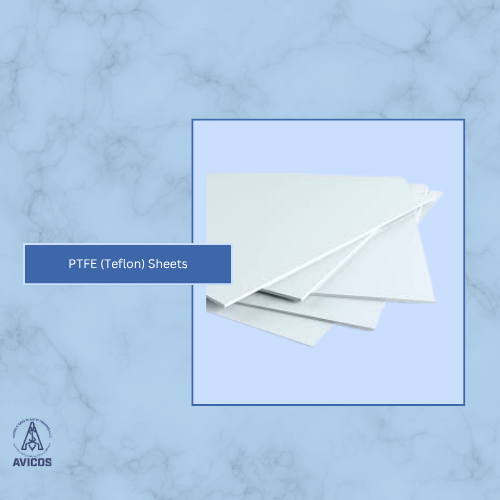
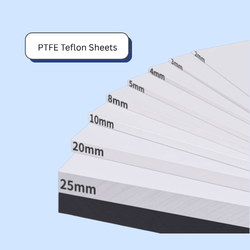
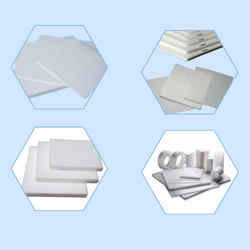
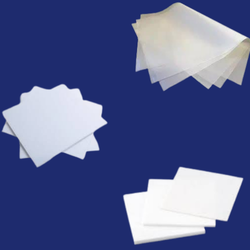
What is a PTFE Teflon Sheet?
Teflon sheets, engineered from premium-grade polytetrafluoroethylene (PTFE), deliver outstanding chemical resistance and thermal stability for insulation, sealing, and lining applications across industries. These fluoropolymer materials combine an ultra-low coefficient of friction, exceptional dielectric strength, and near-universal chemical inertness, offering a durable, non-reactive alternative to rubber, metal, and standard plastic sheeting.
Renowned for their non-stick surface, wide temperature tolerance, and long-term chemical stability, Teflon sheets enable reliable insulation, reduced maintenance, and dependable performance in demanding environments. Precision-skived or molded PTFE sheeting ensures consistent thickness, contamination-free surfaces, and lasting durability for chemical processing, electrical insulation, and gasket manufacturing operating in extreme Middle Eastern and African conditions.
Application
Teflon (PTFE) sheets are extensively used across the UAE, Oman, Qatar, and Kuwait industries for insulation, sealing, and lining applications that require chemical inertness and thermal stability. Their non-reactive surface and wide temperature tolerance make them a preferred choice over rubber and metal wherever contamination resistance, electrical safety, and long-term chemical exposure are equally important, from processing plants to precision electronics.
In chemical and industrial processing, PTFE sheets serve as tank linings, gaskets, and equipment insulation across facilities in Dubai and Sharjah, where their resistance to acids, alkalis, and solvents prevents corrosion and contamination. They are equally valued in electrical and electronics manufacturing for insulation boards, dielectric barriers, and component housings, where their high dielectric strength and heat resistance ensure safe, stable performance. Teflon sheeting is also a trusted choice for food and pharmaceutical processing equipment across the region, thanks to its non-stick, non-toxic, and easy-to-clean surface.
Beyond industrial processing, PTFE sheets serve functional roles in gasket and seal manufacturing, semiconductor fabrication, and general mechanical engineering. They are widely used for cutting custom gaskets, seals, and washers that must withstand aggressive chemicals and extreme temperatures without degrading. Engineering workshops and fabrication specialists also rely on PTFE sheeting for bearing pads, slide plates, and low-friction wear surfaces. Across all these applications, their resistance to heat, chemicals, and moisture ensures long-term, maintenance-free performance in both indoor and outdoor setups throughout the Middle East.
How to Use a PTFE Teflon Sheet?
To unlock the full performance potential of Teflon sheets in insulation, sealing, and lining applications, follow these installation and maintenance protocols:
- Choose virgin PTFE for maximum chemical purity and electrical insulation or filled grades (glass, carbon or bronze) for enhanced wear resistance and dimensional stability.
- Use sharp blades, waterjet or laser cutting for clean edges; avoid excessive friction-generated heat, which can cause surface distortion.
- Handle sheets with clean gloves to prevent surface contamination, especially for food-grade and electronics applications.
- Secure with mechanical fasteners, clamping, or PTFE-compatible adhesives; avoid standard adhesives that fail to bond to its low-friction surface.
- Allow for thermal expansion when installing as linings or gaskets, since PTFE expands more than metals under heat.
- Inspect sheets periodically for creep, deformation, or surface wear under sustained load or pressure; replace if flatness or thickness tolerance is compromised.
- Clean with water or mild solvents; avoid abrasive scrubbing that can scratch the non-stick surface and reduce performance.
Safety Guidelines
Maintain long-lasting, safe performance of Teflon (PTFE) sheets with adherence to these best practices:
- Operate within the -200°C to +260°C continuous service temperature range.
- Avoid exposure to molten alkali metals and elemental fluorine, the only substances known to react with PTFE.
- Use safety eyewear and gloves during cutting, drilling, or machining.
- Avoid overheating beyond 260°C, as PTFE can release harmful fumes (polymer fume fever) if burned or scorched.
- Ensure adequate ventilation when cutting, welding, or machining near PTFE at high temperatures.
- Store sheets flat in a cool, dry area at 15–25°C (40–60% RH), away from direct sunlight and sharp or abrasive surfaces.