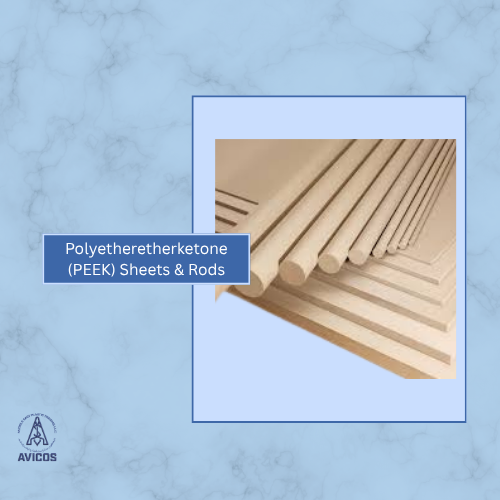
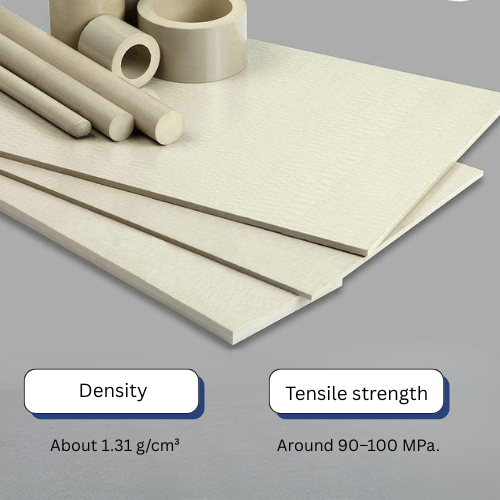
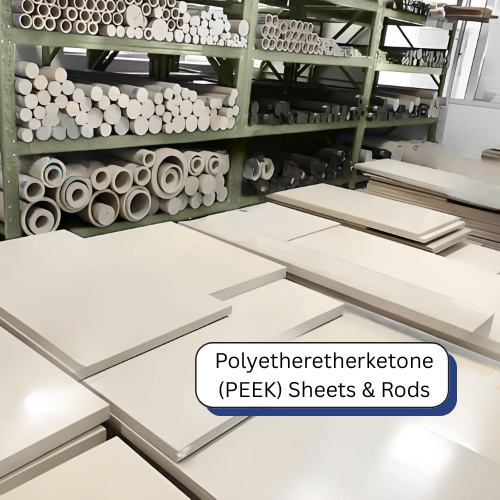
What are Polyetheretherketone (PEEK) Sheets & Rods?
PEEK Sheets and Rods UAE | High-Temperature Engineering Plastic Supplier – Polyetheretherketone (PEEK) sheets and rods deliver aerospace-grade strength-to-weight performance and a continuous service temperature of +250 °C for UAE oil/gas downhole tools, medical implants, and semiconductor wafer handling.
Unfilled maintains 120 MPa tensile, 30% carbon-filled achieves 320 MPa – replacing titanium components while cutting weight 75% across Jebel Ali energy services and Sharjah medical device manufacturing.
Applications
Jebel Ali oilfield service companies machine carbon-filled PEEK rod into subsea connector insulators surviving 15ksi pressure and 200°C wellhead temps. Sharjah medical device manufacturers cut unfilled PEEK sheets for spinal fusion cages and orthopedic trial spacers, sterilized 500 cycles without degradation. Dubai aerospace MROs fabricate 30% glass-filled PEEK bushings for A380 flap tracks reducing weight 2.8kg per actuator.
Ras Al Khaimah semiconductor equipment builders deploy PEEK wafer-handling fingers to eliminate 100% particle contamination. Abu Dhabi LNG compressor OEMs specify PEEK seal rings that bridge the -50°C startup to 220°C service range.
How to Use?
PEEK sheets and rods are flexible to design and work with, whether for prototypes or full-scale production.
- Wear safety gloves to protect your hands when handling PEEK sheets and rods.
- Pre-dry at 150°C × 4hrs before precision machining.
- Carbide tools, 250 SFM max, 0.002 IPR chip load.
- Cleanroom compatible – no silicone lubricants permitted.
- Post-machining anneal eliminates 0.1% residual stress.
- Carbon-filled for stiffness, unfilled for toughness.
Safety Guidelines
For proper and safe handling of PEEK sheets and rods, follow the steps given below.
- Wear safety gloves to protect hands from sharp PEEK edges during cutting.
- Use safety glasses to shield eyes from machining chips.
- Work in well-ventilated areas during thermal processing.
- Avoid overheating beyond 360°C to prevent decomposition.
- Handle chips carefully to avoid cuts from sharp edges.
- Store in cool, clean, dry conditions away from sunlight.
- Dispose of PEEK scrap per industrial waste regulations.
- Inspect regularly for wear, cracks, or discoloration.