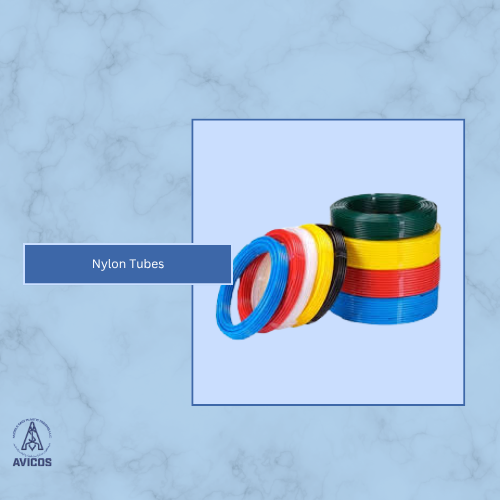
What are Nylon Tubes?
Nylon tubes, engineered from premium-grade polyamide polymers such as Nylon 6 and Nylon 66, deliver outstanding mechanical performance for fluid transfer and pneumatic power applications across GCC industries. These semi-crystalline thermoplastics combine high tensile strength, superior abrasion resistance, and inherent chemical stability, offering a lightweight, corrosion-proof alternative to rubber, metal, and PVC tubing.
Renowned for their pressure endurance, low friction, and smooth internal surfaces, nylon tubes enable consistent airflow, hydraulic efficiency, and long service life in demanding environments. Precision-extruded nylon tubing ensures leak-free connections, reduced frictional losses, and dependable flexibility for industrial automation, lubrication, and instrumentation systems operating in extreme UAE climates.
Features
Nylon tubes redefine reliability in industrial, pneumatic, and hydraulic systems with engineering-grade performance that boosts operational efficiency in Middle Eastern environments.
- High-pressure capability: Withstands pressurized air, gas, and oil transfer without bursting or deforming.
- Superior wear and abrasion resistance: Ensures long-lasting durability even under continuous flexing or sliding contact.
- Low friction & smooth bore: Minimizes pressure drop and prevents fluid contamination or residue build-up.
- Lightweight & corrosion-proof: 1/7th the weight of metal tubing; immune to rust and chemical degradation.
- Dimensional stability: Maintains shape and mechanical integrity under fluctuating temperatures and humidity in GCC climates.
- Easy installation: Offers a tight bending radius for compact assemblies and easy routing in industrial systems.
- Custom-engineered grades: Oil-lubricated, flame-retardant, or reinforced variants for special operating conditions.
Applications
Nylon tubes are extensively used across UAE, Oman, Qatar, and Kuwait industries for fluid conveyance and mechanical protection in compressed air systems, hydraulic circuits, and fuel lines. They serve in:
- Pneumatic controls and automation lines in factories and assembly plants (Dubai, Sharjah).
- Fuel, oil, and coolant transfer in the automotive and marine sectors.
- Hydraulic return and lubrication systems in construction and heavy machinery.
- Cable and wire protection sleeves in industrial enclosures.
- Chemical and air distribution networks in refineries and processing units.
Their resistance to vibration, corrosion, and moisture makes them ideal for long-term performance in both indoor and outdoor setups across the Middle East.
How to Use Nylon Tubes?
To unlock the full performance potential of nylon tubes in industrial and pneumatic systems, follow these installation and maintenance protocols:
- Choose Nylon 12 for high flexibility or Nylon 66 for elevated stiffness and burst strength; use oil-lubricated tubing for unlubricated air systems.
- Use sharp tube cutters or fine-tooth blades; deburr edges to ensure airtight fittings.
- Push-fit or compression fittings with compatible ferrules (brass, stainless steel) ensure secure joints under pressure.
- Avoid sharp kinks, maintain minimum bend radius (4× tube OD) for optimal flow.
- After installation, run gradual pressure build-up tests (up to 1.5× working pressure) to verify leak-free operation.
- Inspect tubing quarterly for wear, cracks, or discoloration; replace when surface abrasion or flattening exceeds 20%.
- Use mild detergents or isopropyl solutions; avoid hot alkaline or acidic agents that may reduce tube life.
Safety Guidelines
Maintain long-lasting, safe operation of nylon tubing systems with adherence to these best practices:
- Operate within -40°C to +120°C continuous service temperature.
- Avoid exposure to concentrated acids and strong oxidizing agents.
- Use safety eyewear and gloves during installation or tube cutting.
- Maintain pressure ratings with a 1.5× safety margin.
- Avoid sharp bends or contact with rotating parts.
- Store coils flat in a cool, dry area at 15–25°C (40–60% RH), away from direct sunlight or oils.