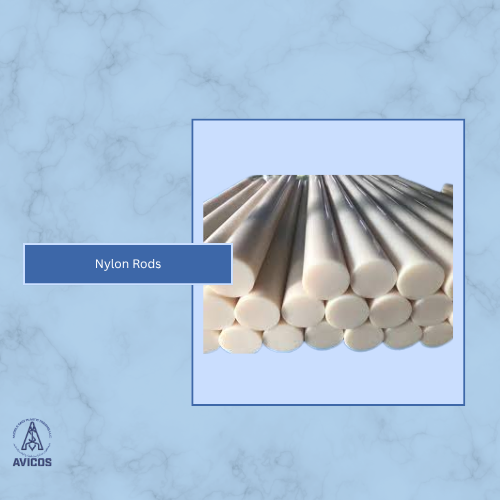
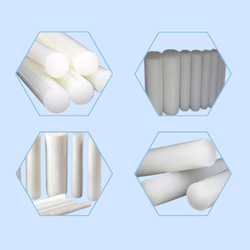
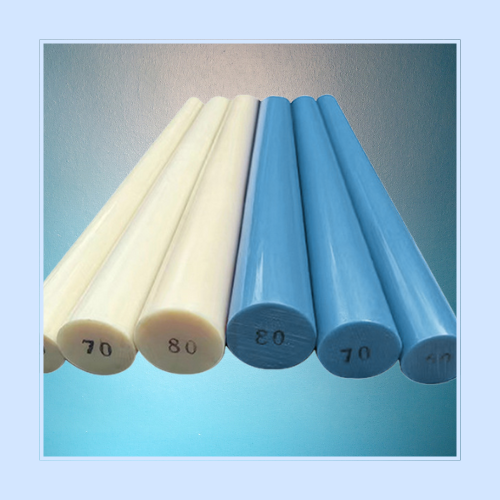
What are Nylon Rods?
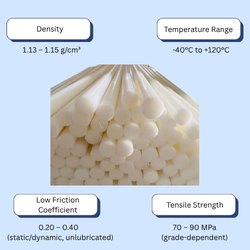
Nylon rods, manufactured from high-performance polyamide materials such as Nylon 6 and Nylon 66, are premium engineering thermoplastics designed for heavy-duty mechanical and industrial applications. These semi-crystalline materials combine exceptional tensile strength, high impact resistance, low friction, and excellent wear performance, making them a reliable alternative to metal in components that require durability, precision, and corrosion resistance.
Known for their machinability, fatigue resistance, and lightweight structure, nylon rods are widely used to produce custom parts that operate smoothly under load while reducing noise, vibration, and maintenance requirements. Their balance of strength and stability makes them ideal for demanding environments across UAE factories, workshops, and GCC industrial projects.
Applications
Nylon rods are widely used in UAE, Oman, Qatar, Kuwait, and across the Middle East for machining into high-performance industrial components. They are commonly converted into:
- Gears and pulleys.
- Bushings and bearings.
- Wear strips and guide rollers.
- Spacers, standoffs, and support blocks.
- Sprockets and rollers.
- Machine parts for automotive, marine, construction, and material handling systems.
Their ability to withstand friction, vibration, moisture, and chemical exposure makes them suitable for factories, fabrication shops, and maintenance operations in Dubai, Sharjah, and across the wider GCC.
How to Use Nylon Rods?
To get the best performance from nylon rods in machining and industrial applications, follow these practical guidelines:
- Use Nylon 6 for higher toughness and impact resistance, or Nylon 66 for greater stiffness and dimensional stability.
- Use sharp carbide or HSS tools, moderate cutting speeds, and proper chip removal to achieve clean finishes.
- Design parts with slight oversize clearance, since nylon may expand after absorbing humidity.
- Install on flat, clean, and stress-free surfaces to prevent distortion during operation.
- Apply light lubrication for initial running if the part will operate under heavy load or high friction.
- Check machined parts for wear, cracking, or dimensional changes during service.
- Keep rods flat, dry, and away from excessive heat, sunlight, or chemical exposure before use.
Safety Guidelines
Follow these safety practices to ensure safe handling and long service life of nylon rods:
-
- Operate within the recommended temperature range of -40°C to +120°C.
- Avoid exposure to strong acids, oxidizing chemicals, and hot alkaline cleaners.
- Use goggles, gloves, and dust extraction during cutting or machining.
- Apply safety margins for load-bearing parts in critical applications.
- Inspect fabricated components periodically for wear, stress, or deformation.
- Store rods in a cool, dry place at 15–25°C, away from direct sunlight and oil contamination.
Check out our other superior quality Nylon Products.